 By Caleb Morgan
Updated November 2026
Landscape edging for rock bed use has one job: keep river rock, pea gravel and crushed stone where you put it. The right border should hold a firm line, resist shifting under heavy rain or mower passes, and install without a trench crew. The picks below were chosen by reviewing product listings, manufacturer specifications and patterns in owner feedback, weighing depth and anchoring, material durability, ease of installation and how well each option suits a rock-filled bed rather than a mulch or lawn edge.
Best overall: EasyFlex No-Dig Landscape Edging – View on Amazon
Best for steel durability: Galvanized Steel Landscape Edging 10-Pack – View on Amazon
Best for long runs: Gardzen 40-Foot Landscape Edging – View on Amazon
Best for a brick look: Greystone Polyrock Landscape Edging – View on Amazon
Best budget pick: Gardzen 1.5-Inch Landscape Edging Kit – View on Amazon
Our Top Picks
| Product | Best for | Key feature |
|---|---|---|
| EasyFlex No-Dig Landscape Edging | Clean stone-look borders | Anchoring spikes included |
| Galvanized Steel Landscape Edging | Durable, long-lasting lines | Hammer-in steel construction |
| Gardzen 40-Foot Landscape Edging | Large beds and long runs | 40-foot continuous length |
| Greystone Polyrock Landscape Edging | Brick-style curved edges | Interlocking brick sections |
| Gardzen 1.5-Inch Landscape Edging Kit | Tight budgets and small beds | 120 spikes in kit |
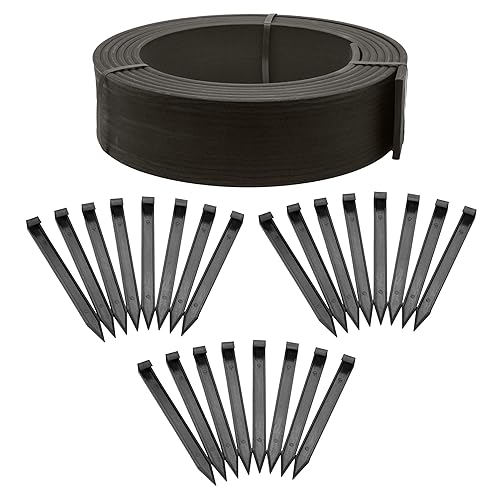
EasyFlex No-Dig Landscape Edging with Anchoring Spikes, 2.7 in Tall Decorative Stone-Look Garden Border, 15 Foot Kit, Slate Gray

EasyFlex No-Dig Landscape Edging with Anchoring Spikes, 2.7 in Tall Decorative Stone-Look Garden Border, 15 Foot Kit, Slate Gray
Best for: Clean stone-look borders around rock beds
A good fit for homeowners who want a visible, decorative edge that sits flush and doesn’t require digging a trench. We also found 6 Best Edgings for Landscape Beds to Keep Clean Lines (2026) useful on this point.
Pros
- Stone-look finish blends with rock beds
- Anchoring spikes hold the line in place
Cons
- Height of 2.7 inches may not contain deep gravel
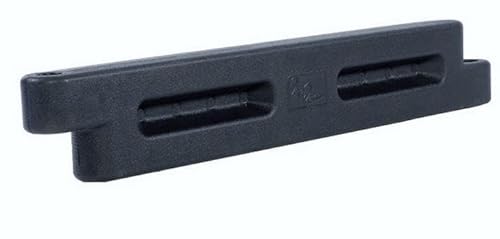
33ft. Galvanized Steel Landscape Edging (10-Pack) – 40″ Metal Edging for Landscaping with 11 Stakes

33ft. Galvanized Steel Landscape Edging (10-Pack) – 40" Metal Edging for Landscaping with 11 Stakes, Hammer-in Metal Landscaping Edging for Yard Pathway & Flower Beds – Lawn Edge for Garden Design
Best for: Durable, long-lasting steel borders
Suited to gardeners who want a rigid, rust-resistant barrier that holds sharp curves and keeps rock from migrating into lawns. We also found 7 Best Railroad Tie Landscape Edging Options for Clean Lines (2026) useful on this point.
Pros
- Galvanized steel resists rust and bending
- Sections are easy to hammer in with a mallet
Cons
- Metal edges can feel hard underfoot in a path
No Dig Design for Flower Beds, Lawns & Pathways, Flexible Edging for Landscaping – Gardzen 40-Foot x 3-Inch Landscape Edging Garden Border with 40 Spikes

No Dig Design for Flower Beds, Lawns & Pathways, Flexible Edging for Landscaping, Durable Weather-Resistant Material Gardzen 40-Foot x 3-Inch Landscape Edging Garden Border with 40 Spikes
Best for: Large beds and long, continuous runs
Works well for wide rock gardens where one long length of edging cuts down on joints and seams.
Pros
- 40-foot length covers large beds with few joins
- Flexible material follows curves easily
Cons
- Thin profile may need extra spikes on loose gravel
Landscape Edging | Garden Edging Border | Polyrock Bricks for Lawn Edging – Greystone 4 Packs

Landscape Edging | Garden Edging Border | Polyrock Bricks for Lawn Edging, Flower beds, Pathways & Yard Edging– 4 Packs | Each Section Has 6 Bricks 48" L x 4" W x 2.25" H | 12 Spikes |Greystone
Best for: Brick-style edges with a solid, stacked look
Best for gardeners who want a defined, masonry-like border that stays put under foot traffic and mower edges. A related read: 6 Best Master Mark Landscape Edging Options for Clean Lines (2026).
Pros
- Brick sections read as a finished, solid border
- Spikes secure each section to the ground
Cons
- Sections are rigid, so tight curves take more effort
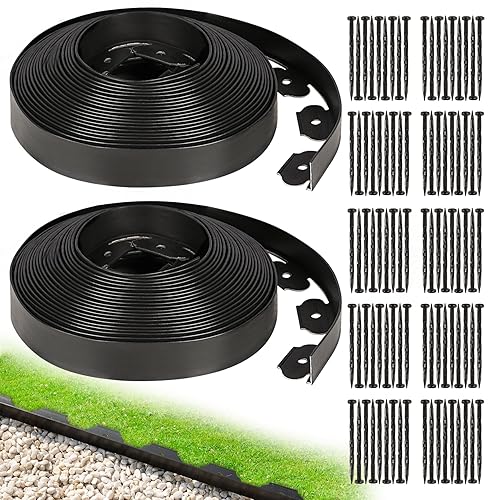
No Dig Lawn Garden Border with 120 Pcs Spikes – Gardzen 1.5″ x 100′ Landscape Edging Kit

No Dig Lawn Garden Border with 120 Pcs Spikes, Flexible Edging Border for Mulch Bed Pathway Paver Gardzen 1.5" x 100' Landscape Edging Kit
Best for: Tight budgets and small rock beds
A practical choice for gardeners who need a large amount of edging at a lower cost and don’t mind a slimmer profile.
Pros
- 100-foot roll and 120 spikes cover many small beds
- Simple no-dig installation
Cons
- Thin 1.5-inch height is less effective against deep gravel
Buying Guide
Edging Height vs. Rock Depth
Measure the depth of your rock layer before buying. Manufacturers often specify height in inches, and an edge that sits lower than the rock will let stone spill over. Aim for edging that rises at least an inch above the finished rock surface.
Anchoring Method
Spikes or stakes keep the border from shifting when rock is raked or walked over. Check how many anchors come with the kit and space them roughly every 12 to 18 inches along straight runs, closer on curves.
Material and Weather Resistance
Steel and heavy plastic hold up well outdoors, while thin materials can crack in freezing temperatures. Galvanized metal resists rust better than uncoated steel, which matters in wet climates.
FAQ
Do I need to dig a trench for landscape edging for rock bed?
Most of the options covered here are designed as no-dig or minimal-dig products, so you can set them on the soil surface and secure them with stakes or spikes. Some will still benefit from light cutting of the sod along the line so the border sits level. Check the installation directions for the specific product before you start. You may also like 6 Best Thick Composite Landscape Edging Options for Clean Lines (2026).
Will the edging keep rock from migrating into the lawn?
A border that stands above the rock depth and is anchored firmly along its full length does a good job of containing river rock and gravel. Gaps at seams, loose spikes or a border set too low can let stones creep out over time. Ensuring the rock layer sits below the top of the edging will help the most.
How deep should the rock be compared to the edging height?
As a general guide, the edging should stand at least as tall as your rock layer so stones stay inside the bed. Shallower edging can work for thin decorative layers, while deeper beds need taller borders. Measure your planned rock depth before choosing a height.
Which material is best for a rock bed exposed to heavy rain?
Metal and sturdy composite options tend to hold their shape better under repeated soaking and freeze-thaw cycles than thinner plastic. Galvanized steel is a common choice when durability is the top priority. Resistance to weather varies by product, so review the material details before you buy.
Can I use these borders around curved or irregular bed shapes?
Flexible edging can be bent into gentle curves, which makes it suitable for rounded beds and winding paths. Tighter curves may need extra stakes or spikes to hold the shape and avoid kinks. Rigid or brick-style pieces are better suited to straight runs and wider sweeps.
How often will I need to check or adjust the edging?
A quick inspection once or twice a year is usually enough to catch loose spikes, shifted sections or heaved soil at the edges. Tighten or re-stake any sections that have lifted, especially after heavy storms or freezing weather. Regular checks help the border keep clean lines for years.
Conclusion
For most homeowners wanting a clean, low-effort border for a rock bed, the EasyFlex no-dig edging is a practical starting point, especially for smaller or decorative beds. If your priority is long-term durability and a crisp metal line, the galvanized steel option is the stronger pick for larger or more exposed areas.
Choose the brick-style or flexible kit based on how much shape you need to work with and how much stake or spike hardware you are comfortable installing. Whichever you select, match the border height to your rock depth and anchor it thoroughly to keep your beds tidy through every season.
Related reading
- Rock Landscape Edging Ideas: 7 Designs for Clean Garden Borders
- Rock Landscape Edging Borders: A Step-by-Step Guide to Clean Lines
- Landscape Rocks for Edging: A Step-by-Step Guide to Clean Borders
- Landscape Edging for Flower Beds: A Step-by-Step Guide for Clean Borders
- Landscape Bed Edging Ideas: 7 Designs for Clean, Lasting Borders
- Flat Rock Landscape Edging: A Step-by-Step Guide for Clean Borders
About Caleb Morgan
Caleb Morgan is part of our editorial team and reviews and edits our lawn edging & trimming guides, checking product details against manufacturer specifications and owner feedback.