 By Lauren Holland
Updated November 2026
The McLane 9 Inch Gas Powered Walk Behind Lawn Edger is a rolling edger built for homeowners who want clean, straight lawn borders along sidewalks, driveways and garden beds without the tight control limits of a string trimmer. It suits people with medium to large yards, long edge runs and a preference for a gas engine over a battery pack. It is less suitable for anyone with a small yard, a very tight budget for maintenance time, or a need for a lightweight tool they can carry up stairs. Read on for the specifications, the trade-offs and a short buying guide before you decide.

Mclane 9 Inch Gas Powered Walk Behind Lawn Edger with 4 Rubber Wheels, 5.50 Gross Torque Engine and Spring Steel Blade, Powder Coat Finish, Red/Yellow
Product Overview
This is a walk-behind edger, meaning you push it along the edge of the lawn while a spinning blade cuts a vertical trench between turf and hard surface. The McLane model is marketed as a 9-inch unit, which refers to the cutting-blade size, and it is finished in a red and yellow powder coat. Its listing describes four rubber wheels, a 5.50 gross torque engine and a spring steel blade.
Walk-behind edgers differ from string trimmers in a few practical ways. A trimmer uses a monofilament line that wears down and can scuff siding or fence posts. A walk-behind edger uses a metal blade that cuts a defined groove, so the result is a crisper, more uniform line. The trade-off is weight, bulk and a setup that is less forgiving around curved beds. Owners who edge long straight runs tend to be happier with this type of tool than those who mostly trim around shrubs and trees.
Because the McLane is a gas unit, it relies on a fuel mix or gasoline supply, a spark plug and periodic air filter and oil checks. It is not a battery tool, so there is no charge time, but you do need to store fuel safely and keep the engine maintained. For a broader look at how gas and battery options compare for this job, see Lawn Edger Battery Powered: Step-by-Step Guide to Clean Lawn Edges.
Key Features & Specifications
The table below lists only the specifications that appear in the product name and listing. Where a detail is not confirmed, it is left out rather than estimated.
| Feature | Detail |
|---|---|
| Tool type | Walk-behind gas powered lawn edger |
| Blade size | 9 inch |
| Blade type | Spring steel |
| Engine rating | 5.50 gross torque |
| Wheels | 4 rubber wheels |
| Finish | Powder coat, red/yellow |
| Power source | Gasoline |
Gross torque is a manufacturer-rated figure measured under standardized test conditions, so it is useful for comparing engines in the same class but does not translate directly into real-world cutting depth or speed. Check the owner’s manual for the recommended fuel grade, oil type and maintenance intervals before first use.
Pros & Cons
Pros
- Walk-behind design gives a straight, consistent cut along long sidewalk and driveway edges.
- Four rubber wheels help the unit roll over uneven turf and reduce drag on lawn surfaces.
- A 9-inch blade covers a reasonable cutting width for each pass.
- Spring steel blade is a common choice for edging because it holds shape under repeated impact.
- Gas power means no charging and no battery to replace over time.
- Powder coat finish is a practical protective layer against weather and scratches.
Cons
- Gas engines require fuel handling, oil changes and seasonal maintenance.
- Walk-behind units are heavier and bulkier than string trimmers or battery edgers.
- Tight curves and small planting beds are harder to follow than with a trimmer.
- Noise and exhaust are typical of gas tools and may matter in dense neighborhoods.
- Owners who want a lightweight, low-maintenance tool may find this model more work than they expect.
Performance Analysis
Based on the listed specifications and general patterns in owner feedback for gas walk-behind edgers, performance tends to depend on three factors: blade condition, engine tune and how the operator sets the cutting depth. A sharp spring steel blade set to a moderate depth usually produces a clean vertical edge in one or two passes, especially in loose or moist soil. Hard-packed clay or dry, compacted turf may require a slower pace and a second pass.
The four rubber wheels are a meaningful feature for this class of tool. They keep the body stable and reduce the tendency of the blade to wander off line. Owners of walk-behind edgers commonly report that the unit tracks best when the operator keeps a steady forward pace and lets the blade do the work rather than forcing the machine downward.
The 5.50 gross torque rating places the engine in the range typically used for light-to-moderate residential edging. For a single homeowner maintaining a typical suburban lawn, this is generally adequate. Heavy root mats or very thick sod may slow the cut, and the operator should expect more passes in those conditions. Regular cleaning of the air filter and fresh fuel help maintain consistent power.
Setup matters as much as the engine. Owners frequently mention that checking blade tightness, wheel alignment and depth adjustment before the first cut prevents most early frustrations. For step-by-step setup and cutting technique that applies to gas edgers in general, see Echo PE 225 Gas Lawn Edger: Setup, Use and Edge-Cutting Tips.
Who Should Buy This Product?
This McLane edger is a good fit for homeowners with medium or large lots, long straight edges along concrete, and a preference for a gas-powered tool. It also works for people who already own other gas yard equipment and are comfortable with routine engine maintenance. Landscapers or property caretakers who edge many properties may appreciate the walk-behind format for speed on straight runs.
You should probably skip this model if your edging is mostly around curved beds, mulch rings and shrubs. A string trimmer or a lightweight edger will be easier to control in those spaces. It is also a weaker choice if you live in an area with strict noise limits, if you dislike handling fuel, or if you want a tool you can store on a shelf in a small apartment.
Buying Guide
Before buying any walk-behind edger, consider these points.
- Edge length and yard size. Long straight runs favor a walk-behind design. Mostly curved or small-area edging favors a trimmer or a compact edger.
- Power source. Gas offers sustained run time and no charging, but adds fuel and maintenance. Battery models are quieter and simpler but depend on charge capacity and runtime per pack.
- Blade size and material. A 9-inch blade is common for residential work. Spring steel is widely used for its durability on repeated impacts.
- Wheel design. Rubber wheels reduce turf damage and help the unit track straight. Check that the wheels adjust or lock in a way that fits your depth preference.
- Weight and storage. Measure your storage space and consider whether you can lift the unit into a vehicle or onto a shelf.
- Service access. Confirm that spark plugs, air filters and blades are easy to reach and that replacement parts are available.
If you want to compare this model with other options, here are three well-known alternatives that take different approaches.
The EARTHQUAKE 41273 79cc 4-Cycle Walk-Behind Edger is a larger-displacement four-cycle option in red and black. Its bigger engine class suits buyers who expect heavy use or tougher sod conditions.

EARTHQUAKE 41273 79cc 4-Cycle Walk-Behind Edger, Red/Black
The Wild Badger Power 31cc 4-Cycle Gas Walk-Behind Lawn Edger, 9.5-in Blade is a smaller displacement unit with a 9.5-inch two-tooth blade and five cutting depths. Its depth range makes it a practical choice for sidewalks, driveways and lawn borders where you want to adjust the cut frequently.
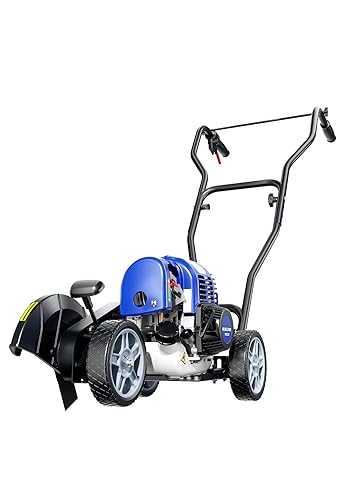
Wild Badger Power31cc 4-cycle walk-behind edger with 9.5-in 2-tooth blade and 5 cutting depths for sidewalks, driveways and lawn borders. 31cc 4-Cycle Gas Walk-Behind Lawn Edger, 9.5-in Blade
For a broader set of walk-behind options with different blade sizes and engine classes, see 6 Best Walk Behind Lawn Edger Options for Clean Edges (2026) and John Deere 3 Lawn Edger vs Typical Walk-Behind Edger: Which Should You Choose?.
FAQ
Is a walk-behind gas edger better than a string trimmer for sidewalks?
For long straight sidewalk and driveway edges, a walk-behind edger usually produces a cleaner, more uniform vertical cut than a string trimmer. Trimmers are better for curves, tight spots and areas near fences or plants.
What does the 5.50 gross torque rating mean?
Gross torque is a standardized manufacturer rating that allows rough comparison between engines. It does not directly predict cutting speed or depth in your yard, so it should be read alongside blade design and soil conditions.
How deep should I set the blade?
Most owners start with a shallow setting, around half an inch, and increase depth gradually until the edge is clean. Going too deep stresses the engine and can throw soil. Consult the owner’s manual for the manufacturer’s recommended range.
What fuel should I use?
Follow the fuel type and mix specified in the owner’s manual. Gas engines are sensitive to fuel quality, and using stale fuel is a common cause of starting problems. Store fuel in an approved container away from heat sources.
How often does a gas edger need maintenance?
Routine tasks include cleaning or replacing the air filter, checking the spark plug, changing oil on the schedule in the manual, and sharpening or replacing the blade when edges become ragged. Frequency depends on how much you use the tool.
Can I use this edger on rough or rocky ground?
Walk-behind edgers can handle moderate debris, but rocks and roots can damage the blade or throw objects. Clear the path before cutting and keep bystanders at a safe distance.
Is a gas edger harder to start than a battery model?
Gas engines require a start procedure, including choke and priming steps, and may need several pulls when cold or when fuel is old. Battery models start instantly, which many users find more convenient.
Should I consult a professional before buying or servicing?
If you are unsure about engine repair, fuel handling or blade replacement, consult a qualified small-engine technician or the manufacturer’s support line before proceeding.
Final Verdict
Our assessment of the McLane 9 Inch Walk Behind Gas Powered Lawn Edger
The McLane 9 Inch Gas Powered Walk Behind Lawn Edger is a reasonable choice for homeowners who need a straight, consistent edge along long concrete runs and who are comfortable with gas maintenance. Its rubber wheels, spring steel blade and 5.50 gross torque engine align with what is typical for this category. It is not the right tool for curved beds, small yards or buyers who want a light, low-effort machine. Compare the alternatives above, measure your edge lengths and decide based on your yard’s layout and your willingness to maintain a gas engine.
About Lauren Holland
Lauren Holland is part of our editorial team and reviews and edits our lawn edging & trimming guides, checking product details against manufacturer specifications and owner feedback.