 By Caleb Morgan
Updated November 2026
Steel landscape edging nearby is easier to find than most people expect, but choosing the right profile, gauge, and finish takes a little more thought. In this guide, you will learn how to narrow your local options, check the specs that actually matter, measure your bed, and decide whether a pickup or a delivery makes more sense. By the end, you should be able to walk into a garden center or open a local supplier’s website and know exactly what to ask for.
Why Steel Edging Works for Clean Lawn Borders
Steel holds a crisp, straight line in a way that plastic and rubber often cannot. It resists being pushed out of shape by mower wheels and string trimmer heads, and a well-set run can stay visually sharp for years. Manufacturers typically describe steel as suitable for both straight runs and gentle curves, which makes it a practical choice for beds that follow a fence line, a walkway, or a patio edge.
Steel also comes in several finishes. Galvanized steel has a zinc coating that resists rust, powder-coated steel adds color and an extra protective layer, and Corten (weathering) steel develops a stable brown patina over time. Each finish changes how the edging looks and how long it lasts, so match the finish to your yard before you buy.
Step 1: Measure the Length and Height You Need
Before you search for steel landscape edging nearby, measure your project. Walk the perimeter with a tape measure and add 10 percent for cuts, corners, and mistakes. Note any curves, because tighter curves need more flexible strips or shorter sections.
Next, decide on height. Most residential beds use edging between 4 and 8 inches tall. Taller edging holds back more mulch and soil but is more visible and needs deeper installation. A common approach is to bury roughly one-third to one-half of the edging’s height, so a 6-inch strip sits about 2 to 3 inches below grade.
Quick Measurement Checklist
- Total linear feet of each bed border
- Number of curves and their approximate radius
- Soil type (loose sand, clay, or rocky ground)
- Height of the lawn relative to the bed (raised or flush)
- Whether a mower wheel will run along the edge
Step 2: Compare Gauge, Profile, and Finish
Gauge refers to metal thickness. Lower gauge numbers mean thicker steel. Heavier gauges resist bending and hold up better against stakes and repeated trimmer contact, while lighter gauges are easier to bend around curves. If your borders are mostly straight, a sturdier gauge is usually worth it. For tight curves, a more flexible strip may be the better match.
Profile means the cross-section shape. Common profiles include straight-top strips, lip-top designs that add rigidity, and rolled-top styles that hide sharp edges. Ask the supplier which profile they stock and whether it comes in pre-cut lengths or in rolls.
Choosing a Finish
| Finish | Best For | Things to Watch |
|---|---|---|
| Galvanized | Traditional lawns, budget-minded projects | Bright silver look may stand out; cut edges can rust over time |
| Powder coated | Matching a specific color scheme | Coating can chip if struck hard with a trimmer or shovel |
| Corten (weathering) | Modern and naturalistic landscapes | Rust-colored staining can mark nearby paving or stone |
| Stainless steel | Wet climates and coastal yards | Typically a premium option with a higher upfront investment |
Step 3: Find Local Suppliers
When you search for steel landscape edging nearby, you will typically find three kinds of sources: big-box home centers, independent garden and nursery centers, and landscape supply yards. Home centers are convenient and usually carry standard lengths in galvanized and powder-coated finishes. Nurseries often stock a smaller range but can advise on installation. Landscape supply yards may carry bulk rolls and specialty finishes like Corten, and they can sometimes cut custom lengths.
Call ahead and ask three questions: Do you have this profile in stock in the length I need? Can you cut it to size? Do you carry stakes and connectors in the same finish? Having everything from one supplier avoids mismatched hardware.
Step 4: Plan the Installation
Steel edging is usually set with stakes driven through the strip at intervals. Most manufacturers recommend stakes roughly every 12 to 24 inches, with closer spacing on curves. Before you dig, call your local utility locating service so you know where buried lines run.
- Mark the bed line with spray paint or a garden hose.
- Dig a shallow trench along the line, deep enough to bury about one-third to one-half of the edging’s height.
- Set the steel strip in the trench and check that the top is level or follows your intended grade.
- Drive stakes through the pre-punched holes or along the outer face, angling them slightly toward the bed.
- Join sections with connectors or overlap them, following the manufacturer’s directions.
- Backfill the trench, tamp the soil gently, and check the line one more time.
Tools You Will Likely Need
- Tape measure and spray paint or garden hose for layout
- Flat spade or edging spade for the trench
- Hand tamper or the back of a shovel
- Rubber mallet or sledgehammer for driving stakes
- Tin snips or an angle grinder with a metal-cutting disc for cuts
- Work gloves and eye protection
Common Mistakes to Avoid
- Setting the edging too high. A strip that sits proud of the lawn can catch mower decks and look unfinished.
- Skipping stakes. Unstaked steel can heave with frost or bow under mulch pressure.
- Cutting without protecting the edge. Cut steel can be sharp; file or cover edges before handling.
- Mixing finishes. Galvanized and Corten side by side can look accidental.
- Ignoring the curve radius. Forcing rigid strip around a tight bend causes kinks.
Tips for a Cleaner Finish
Install edging when the soil is moist but not saturated, since this makes trenching easier and helps the strip seat evenly. Run a string line between stakes to check straightness before you backfill. If you plan to mulch, leave the top edge about half an inch above the mulch depth so material does not spill over. For a more detailed walk-through on setting straight runs, see Stainless Steel Edging Landscape: A Step-by-Step Guide to Clean Borders, which covers many of the same techniques.
If you are comparing options before you buy, 7 Best Steel Edgings for Landscape Options for Clean Lines (2026) gives a useful overview of common profiles. Homeowners who want a rustic look may also want to read Corten Steel Landscape Edging: A Step-by-Step Guide to Clean Borders before committing to a finish.
For guidance on finding local sellers beyond this article, Metal Landscape Edging Nearby: How to Find and Choose the Right Option walks through what to look for at each type of store. If you are weighing steel against other materials, What Are the Best Options for Landscape Edging? 7 Choices Compared puts the trade-offs side by side.
Recommended gear
A few supplies make steel installation noticeably easier and safer.
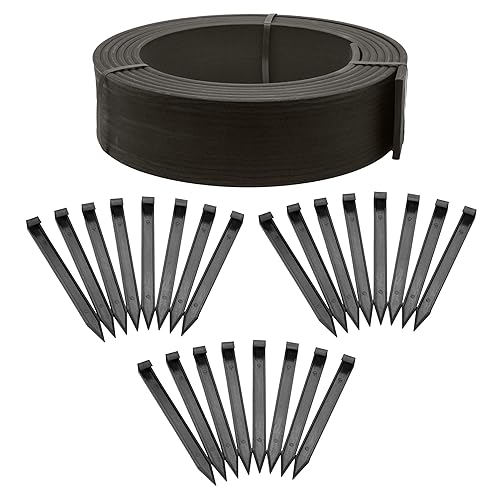
- Steel landscape edging stakes. Matching stakes hold the strip firmly and keep the finish consistent. View on Amazon
- Metal-cutting disc for an angle grinder. A clean cut prevents jagged edges and reduces the chance of bending the strip out of line. View on Amazon
- Cut-resistant work gloves. Steel strips have sharp edges, and gloves rated for cut protection reduce the risk of injury during handling. View on Amazon
- Rubber mallet. A mallet drives stakes without damaging the strip finish. View on Amazon
FAQ
How do I know how much steel edging to buy?
Measure the total linear footage of your bed borders, then add about 10 percent for cuts and corners. Buy a little extra so you are not short if a section gets damaged or cut at the wrong length.
How deep should steel edging be buried?
Most installers bury about one-third to one-half of the strip’s height. For a 6-inch strip, that usually means 2 to 3 inches below grade. Check the manufacturer’s directions for the specific product.
Can I install steel edging on a curve?
Yes, but tighter curves need more flexible strips and closer stake spacing. Very sharp bends may require cutting the strip into shorter segments and joining them.
How far apart should the stakes be?
Manufacturers commonly recommend placing stakes every 12 to 24 inches, with closer spacing on curves and in loose soil. Always follow the instructions included with your product.
Will steel edging rust?
Galvanized and powder-coated steel resist rust well, though cut edges can oxidize over time. Corten steel is designed to develop a stable surface patina. Stainless steel offers the highest corrosion resistance in most conditions.
Can I cut steel edging at home?
Yes, with tin snips for thinner gauges or an angle grinder with a metal-cutting disc for heavier strips. Wear eye protection and gloves, and file any sharp edges afterward.
Does steel edging work with mulch and gravel?
Yes. Steel holds mulch and gravel well when the top edge sits slightly above the surface material. If you use heavy stone, check that the strip and stakes are rated for the added pressure.
Should I hire a professional for installation?
Many homeowners install steel edging themselves, but if your yard has buried utilities, heavy clay, or complex grading, consult a landscape professional. Always contact your local utility locating service before digging.
Conclusion
Finding steel landscape edging nearby is straightforward once you know what to measure and what to ask. Match the height, gauge, and finish to your yard, confirm the supplier has the right stakes and cutting options, and plan a careful installation. With those steps in order, you can achieve a clean, durable border that holds its line season after season.
Related reading
Ready to choose one?
About Caleb Morgan
Caleb Morgan is part of our editorial team and reviews and edits our lawn edging & trimming guides, checking product details against manufacturer specifications and owner feedback.