 By Lauren Holland
Updated November 2026
A lawn edger and a weed wacker (string trimmer) both trim grass, but they are built for different jobs. A lawn edger cuts a crisp, vertical line between turf and a hard surface such as a sidewalk, driveway or bed, and it does this well when you want the sharpest possible border. A weed wacker is the better all-rounder: it handles edges, weeds, tall grass and awkward corners, and it is the right pick if you need one tool for the whole yard. Read on for a side-by-side look at how the two compare.
| Criterion | Lawn Edger (power, wheeled or cordless) | Weed Wacker (string trimmer) |
|---|---|---|
| Edge sharpness | Clean, vertical, consistent edge | Rounded or slightly ragged edge |
| Best surfaces | Concrete, pavers, metal or plastic edging | Grass, weeds, fences, trees, uneven ground |
| Cutting depth | Typically a few inches into the soil | Cuts at the level of the string, no soil contact |
| Weed and grass creep control | Removes the root zone along the line | Cuts top growth; roots often regrow quickly |
| Speed on long straight edges | Fast on long, straight runs | Slower on long straight runs |
| Versatility | Limited to edges and some clean-up | Handles most trimming tasks in the yard |
| Ease of use for beginners | Requires steady guidance along a line | Easy to learn, forgiving on curves |
| Maintenance | Blade or wheel checks, depth adjustment | Line replacement, head cleaning, spool refills |
Edge Sharpness: Lawn Edger Wins
If the line where grass meets a walkway is the thing you notice most, a lawn edger gives the cleaner result. Its blade or disc cuts straight down into the soil, so the edge looks like a sculpted wall of turf rather than a sheared-off fringe. Most owners who care about this detail choose an edger for the front walk and driveway, then trim the rest of the yard with a string trimmer.
A weed wacker can produce a decent edge if you angle the head correctly. Hold the trimmer so the string tip is roughly parallel to the ground and sweep it along the surface. The result is tidy but softer, and the grass just beyond the line will keep springing back. For a truly crisp border on a hard surface, the edger is the clear winner.
Best Surfaces and Terrain: Weed Wacker Wins
A string trimmer is not limited to edges. It works on rough or uneven ground, around fence posts, along retaining walls, under shrubs and in tall, wild grass. Because the line flexes, it skirts obstacles that would stop a rigid edger cold. If your yard is a mix of open lawn and tight spots, the weed wacker covers more of it.
A lawn edger is best on flat, firm ground next to a hard edge. Most models are designed to run along concrete, brick, stone or metal edging, and they struggle in soft, rooty or heavily uneven soil. Manufacturers generally advise keeping the wheel or guide on a stable, level surface, so check the spec sheet for your yard before you buy.
Cutting Depth and Grass Creep: Lawn Edger Wins
Grass creep, where turf roots spread sideways into beds and across paths, is the real enemy of a clean border. A lawn edger cuts into the soil and severs those runners, typically to a depth of a few inches. That clears the root zone and buys you weeks, sometimes longer, before creep returns. For a broader look at the problem, see Stopping Weeds and Grass Creep at Lawn Edges.
A weed wacker only cuts what sticks above the soil. It keeps the top growth down, but roots can keep spreading underground, so the line looks clean for a few days and then softens. You can get decent results by trimming more often, but you will not get the same long-lasting separation an edger provides.
Speed on Long Straight Edges: Lawn Edger Wins
On a long, straight run such as a driveway or a 40-foot sidewalk, a wheeled or power edger moves quickly and keeps a consistent line. You guide it along the edge rather than swinging it, which reduces fatigue and keeps the depth uniform. Plan on a steady, deliberate pace rather than racing, because the blade or disc will follow the path you set.
A weed wacker is slower on long straight edges because you are sweeping the head back and forth and watching the line closely. It is faster when the work is scattered, such as clipping around a dozen separate obstacles, where switching tools would waste more time than it saves.
Versatility: Weed Wacker Wins
This is where the weed wacker pulls ahead decisively. One tool handles edges, tall grass, weeds in gravel, the base of fences, and strips along garden beds. For many homeowners, a string trimmer is the only trimming tool they ever need, and it is the most common choice for general yard maintenance.
A lawn edger does a narrower set of jobs. It is excellent at what it does, but it will not clear a jungle of tall weeds or reach behind a shed. If you only care about edges, that focus is a strength. If you want to reduce the number of tools in your shed, the weed wacker is the one to keep.
Ease of Use for Beginners: Weed Wacker Wins
String trimmers are forgiving. The line gives a little on contact, and the head can be angled to work on curves and corners without much practice. Most people become comfortable within a few sessions. Keep your body balanced, use both hands, and keep the head below waist height, following the manufacturer’s safety instructions.
Edgers take a bit more skill. You need to keep the guide wheel tracking along the edge, maintain a steady depth, and avoid wandering into the lawn or the hard surface. Beginners often produce a wavy line on their first pass. Practice on a short, straight section, and expect the second and third sessions to look noticeably better than the first. For safe handling, the guidance in Power Lawn Edgers: Setup, Safe Use and Care is worth reading before you start.
Maintenance: It Depends on the Tool
Maintenance is close to a tie, but the tasks differ. A weed wacker needs regular line replacement or refills, occasional cleaning of the spool and head, and an eye on the cutting guard. Keeping the line at the correct length is important for both performance and safety. Owners often report that trimming with fresh line makes a noticeable difference in cut quality.
A lawn edger needs depth adjustments, checks on the blade or disc, and regular clearing of debris from the wheel and cutting area. Power models also need the usual engine or battery care. Seasonal planning helps here, and Seasonal Lawn Edge Care: What to Do and When outlines a good schedule. Keep in mind that a clean edge also depends on what happens to it between trims, which is covered in Lawn Edge Maintenance: Trimming, Weeds and Repairs.
Which Should You Choose?
Choose a lawn edger if:
- Sharp, vertical edges along sidewalks, driveways and beds are your main goal.
- You want to slow grass creep by cutting into the root zone.
- Your borders are long, straight and on firm, level ground.
- You already have a string trimmer for everything else.
Choose a weed wacker if:
- You want one tool for edges, weeds, tall grass and tight spots.
- Your yard has curves, fence lines, tree bases or uneven ground.
- You are new to yard tools and want a forgiving learning curve.
- You have a limited budget for tools and want the most versatile option.
Many homeowners end up owning both. An edger keeps the hard-surface borders sharp, and a weed wacker handles everything else. If you are weighing a specific walk-behind model against the general category, the comparison in John Deere 3 Lawn Edger vs Typical Walk-Behind Edger: Which Should You Choose? may help. For a more manual option, Manual Lawn Edgers: Half-Moon Edgers and Shears covers the hand tools.
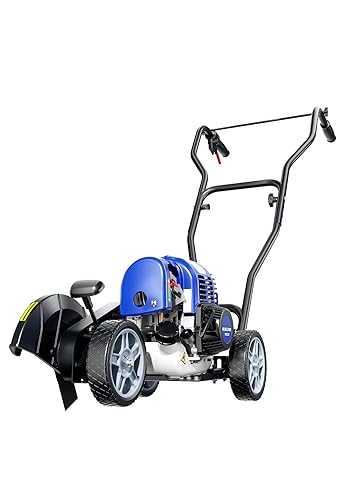
Top Pick for Lawn Edges: Power Lawn Edger
For a dedicated edger, look at a wheeled power edger or a cordless model if you want to avoid cords and fuel. Cordless options are covered in Best Cordless Lawn Edgers: 5 Battery Edgers Compared. Here is a product that fits the edger category:
Top Pick for Versatility: String Trimmer
If one tool needs to do most of the work, a string trimmer is the sensible choice. Look for a model with an adjustable shaft and an easy line-feed head. This product type is the one to choose for mixed-terrain yards:
Before you buy either tool, check the manufacturer’s specs for cutting width, line size or blade type, and confirm that it suits your yard. Using a trimmer near edges has its own technique, which is covered in Using a String Trimmer for Lawn Edges Safely.
FAQ
Can a weed wacker replace a lawn edger?
For light edging, yes. A string trimmer can produce a tidy line if you angle the head correctly and trim often. It will not cut as deep or slow grass creep as effectively, so if you want a crisp, long-lasting border on a hard surface, an edger does the job better.
Can a lawn edger replace a weed wacker?
Not really. An edger is designed for straight, vertical edges. It will not clear tall grass, weeds around fences, or the base of trees. You will still need a string trimmer or another cutting tool for those areas.
How deep should a lawn edger cut?
Most manufacturers recommend a shallow depth, usually a few inches, to sever roots without digging into the soil too far. Set the depth so the blade or disc cuts cleanly through the root zone of the grass. Adjust it for your soil type and check the owner’s manual for the recommended setting.
How often should I edge my lawn?
Many homeowners edge every two to four weeks during the growing season, and less often in slow periods. Frequency depends on grass type, climate and how fast creep returns. Watch for grass pushing over the line and edge when it becomes visible.
Is a power edger or a manual edger better?
Power edgers are faster and better for long borders. Manual edgers, such as half-moon or shear-style tools, are quieter, require no fuel or battery, and suit small beds or tight spaces. The right choice depends on the size of your borders and how much effort you want to put in.
Conclusion
A lawn edger is the better tool for sharp, long-lasting borders along hard surfaces, and it is the right choice if clean lines are your priority. A weed wacker is the better all-around tool, covering edges, weeds, uneven ground and tight spots with one machine. Most yards benefit from the weed wacker as the core tool and an edger for the lines that people see most. Choose based on how you use your yard, and you will get a cleaner, more manageable lawn.
About Lauren Holland
Lauren Holland is part of our editorial team and reviews and edits our lawn edging & trimming guides, checking product details against manufacturer specifications and owner feedback.