 By Lauren Holland
Updated November 2026
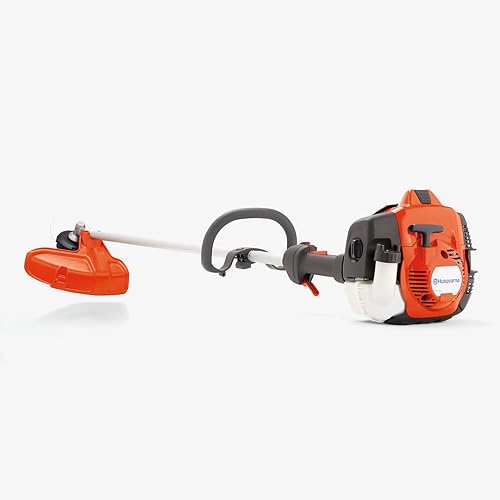
A straight shaft string trimmer is the better all-round choice for most homeowners, offering reach, balance and a cleaner path under shrubs and along fences. A curved shaft model suits people who spend most of their time on tight spots, slopes and low-clearance areas, where a shorter, more compact head is easier to control. Choosing between string trimmer straight vs curved designs comes down to your yard shape and how you work.
| Criterion | Straight Shaft | Curved Shaft |
|---|---|---|
| Reach | Longer effective reach | Shorter reach |
| Balance and weight | Heavier at the head, needs a shoulder harness | Lighter feel, more manageable at arm’s length |
| Edging along walks | Good when rotated for a vertical cut | Good, with a tighter pivot point |
| Tight spaces and under obstacles | Harder to reach low gaps | Easier under decks and into corners |
| Vibration and fatigue | Often lower with a harness | Can feel more punishing on long sessions |
| Storage footprint | Longer, needs more wall or floor room | More compact |
Reach and Coverage: Straight Shaft Wins
A straight shaft keeps the cutting head farther from your body. Most manufacturers position the shaft so the line sits well ahead of your hands, which helps when you’re working along a fence line or around a flower bed without stepping onto the planting. The extra length also lets you cover wide strips of lawn more quickly. If your work is mostly open ground, straight shaft designs usually cover more area per pass.
Balance and Comfort: Curved Shaft Wins for Many Users
A curved shaft brings the head closer to the operator’s hip and lowers the center of gravity. Many users find it easier to keep the head level at waist height, and the shorter lever arm reduces wrist strain. Straight shafts often need a shoulder harness to stay comfortable over long sessions. If you have limited upper-body strength or plan to trim for an hour or more, the curved design is the more forgiving option.
Edging Along Walks and Beds: A Near Tie
Both styles can produce a clean vertical edge, provided you rotate the head so the line cuts downward rather than sideways. A straight shaft gives you a longer sweep, which helps keep a consistent depth along a walkway. A curved shaft offers a tighter pivot, so you can change angle quickly at corners. For most lawn edges the results are similar, and technique matters more than shaft shape.
Tight Spaces and Obstacles: Curved Shaft Wins
Under decks, around fence posts, and beneath low shrubs, a curved shaft is usually easier to maneuver. The shorter head can slip into gaps that a straight shaft would struggle to reach without you crouching or bending awkwardly. If your yard is full of obstacles, this is where the curved design earns its place.
Which Should You Choose?
- Choose a straight shaft if you have large, open lawns and want maximum reach per pass.
- Choose a straight shaft if you are comfortable using a harness and want the most coverage for the effort.
- Choose a curved shaft if your yard has many obstacles, slopes or tight corners.
- Choose a curved shaft if you are shorter, have limited upper-body strength, or trim in long sessions.
- Choose a curved shaft if storage space is limited.
Popular straight shaft options include the View on Amazon and the View on Amazon. For a curved design, consider the View on Amazon or the View on Amazon.
If you are still deciding on the power source, read String Trimmer Gas vs Electric: Which Is Right for Your Yard? (2026) before you buy. For edging technique specifically, Using a String Trimmer for Lawn Edges Safely covers the steps and precautions in detail.
FAQ
Is a straight shaft trimmer better for edging?
Not necessarily. Both shaft types can edge well when the head is rotated to cut vertically. A straight shaft offers a longer sweep, while a curved shaft gives tighter control at corners.
Which shaft type is easier for beginners?
Many beginners find the curved shaft easier to handle because it is lighter at arm’s length and the head sits closer to the body. Practice on open ground before tackling edges.
Do I need a harness for a curved shaft trimmer?
Harnesses are less essential with curved shafts, though some users still prefer one for long sessions. Check the manufacturer’s guidance for your specific model.
Can a curved shaft reach under a deck?
Usually yes, since the shorter head fits into low gaps more easily. Always clear debris and check for hidden hazards before starting the engine or motor.
Does shaft shape affect line life?
Shaft shape has little direct effect on line life. Line wear depends more on how often the head contacts hard surfaces like concrete and edging, so keep the cutting angle shallow.
Conclusion
When weighing string trimmer straight vs curved designs, think about your yard before anything else. Straight shafts deliver reach and coverage for large, open lawns, while curved shafts offer comfort, control and access in cramped or obstacle-heavy spaces. Match the shaft to your most common task, and you will get cleaner edges with less effort. Try to handle a model in a store if you can, since balance is very personal.
Before you buy: helpful guides
About Lauren Holland
Lauren Holland is part of our editorial team and reviews and edits our lawn edging & trimming guides, checking product details against manufacturer specifications and owner feedback.