As an Amazon Associate I earn from qualifying purchases. This page may contain affiliate links.
Yes, you almost always need stakes for landscape edging unless the edging is designed to lock together or sits in a rigid base. Stakes hold the edging at the correct height and angle, resist the push of soil and roots, and keep the line straight over time. Spacing typically runs 12 to 24 inches apart, depending on the material and the soil.
Why Stakes Matter for Landscape Edging
Edging does two jobs at once. It separates the lawn from the bed, and it has to hold that separation through freezing winters, heavy rain, and the constant pressure of mulch and soil pushing against it. Without stakes, most edging materials slowly lean, bow, or pop up. A flexible strip that looked perfect in June can be wavy by October.
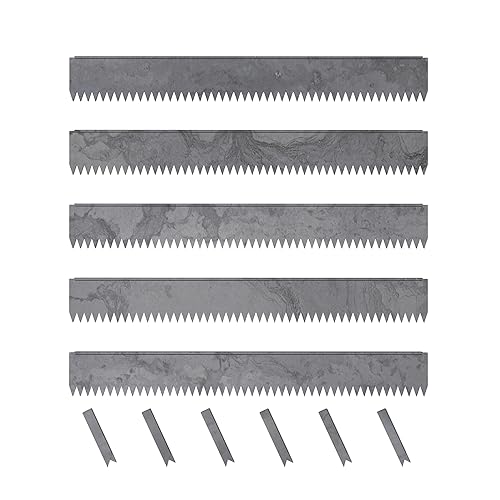
Shopping for one? See our guide: Easyflex No Dig Landscape Edging Kit Review: Is It Worth It?.
Stakes also control the top edge. Even a rigid product can settle unevenly if the ground beneath it is soft. A stake driven down into firm soil anchors each section so the top stays level with the surrounding grade.
Factors That Decide How Many Stakes You Need
The right stake plan depends on four variables:
- Edging material. Thin plastic and flexible steel strips need stakes close together, often every 12 to 18 inches. Heavier steel, aluminum, and concrete-based products are usually fine at 18 to 24 inches. Manufacturers’ install instructions are the best reference for their specific product.
- Soil type. Loose sandy soil gives stakes little to grip, so use longer stakes and tighter spacing. Clay holds stakes well but swells and shrinks with moisture, which can push edging out of line.
- Curves. Tight curves need more stakes because the material wants to straighten. Place stakes at the peak of each curve and on both sides of any transition.
- Traffic and pressure. Edging along a walkway, a mower path, or a slope where mulch piles up needs stakes placed more frequently and driven deeper.
How to Set Stakes So They Hold
Good stake work comes down to depth, angle, and alignment. Stakes driven too shallow pull free after a season. Stakes driven crooked put sideways force on the edging and bend it.
- Lay the edging in its final position and mark where each stake will go, keeping the spacing consistent.
- Check that the stake is long enough. A common target is that about two-thirds of its length sits below grade, and the top sits flush with or slightly below the edging’s top lip.
- Pre-drill or use a rubber mallet to start each stake straight. Angle it slightly toward the bed side so it pulls the edging back against the soil, not outward.
- Drive the stake until the head sits at the right height. Avoid overdriving, which can crack plastic stakes or bend metal ones.
- Fasten the edging to each stake with the included clips or screws. Do not rely on the stake alone to hold the strip.
- Walk the line after the first watering or rain and recheck the height and alignment. Tap any loose stake back down.
Practical Tips for Long-Lasting Stakes
- Use stakes made of the same material as the edging, or a compatible one, to avoid corrosion where metals touch.
- Pack soil firmly around each stake after driving so it does not wobble.
- Keep stakes on the bed side of the edging. Stakes on the lawn side get hit by mowers.
- Inspect the line each spring. Frost heave can lift stakes, and a quick tap restores the grade.
- In very hard, rocky ground, drill a pilot hole rather than forcing the stake, which can bend it.
What We’d Use
For most DIY installs, a set of matching steel landscape stakes sized for the edging you choose keeps the system consistent and easy to source. Look for stakes that match the edging’s height and gauge.
- Steel landscape edging stakes, sized to match your edging height. View on Amazon
- Rubber mallet for driving stakes without damaging them. View on Amazon
If you are still choosing a material, the guide to Spikes for Landscape Edging: A Step-by-Step Guide to Clean Lines explains how spike-style fastening compares with other methods. For a tougher option that relies less on stakes, see Hammer in Landscape Edging: A Step-by-Step Guide for Clean Borders.
Related Questions
Can I install edging without any stakes?
Some products, such as certain concrete or stone-look systems set in a gravel or concrete base, can stand without stakes. Flexible and thin-wall products almost always need them.
How deep should landscape edging stakes go?
Aim for roughly two-thirds of the stake’s length below grade, with the top at or just below the edging’s top lip. Follow the manufacturer’s specifications where they are given.
Why does my edging keep pushing up?
Frost heave, loose soil, or stakes that are too short or too shallow are the usual causes. Re-drive the stakes, check spacing, and consider a stronger base in problem areas. A detailed walkthrough is in Wood Landscape Timber Edging: A Step-by-Step Install Guide.
Are longer stakes always better?
Longer stakes hold better in loose soil, but they must still match the edging height. A stake that is far taller than the edging can look awkward and reduce the clean-line effect.
Should stakes go on the inside or outside of the edging?
Place stakes on the bed side. That keeps them away from mower wheels and lets the stake press the edging back toward the soil it is holding.